
Home›Dermatology› Rosacea Treatment
● Rosacea Treatment · Seomyeon, Busan
Rosacea Treatment in Busan Seomyeon
Quick answer: Rosacea is a chronic inflammatory skin condition that causes flushing, persistent central-face redness, visible vessels and sometimes acne-like bumps. It cannot be cured, but it can usually be controlled by identifying triggers, using medical treatment for inflammation, and adding vascular laser for redness and vessels. At Daybeau Clinic Seomyeon a physician first confirms the diagnosis and subtype; the plan and price are set after consultation.
✦ Diagnosis & subtype first
✦ Medical + vascular laser
♡ Often 3–5 laser sessions
| At a glance | |
|---|---|
| Condition type | Chronic, relapsing inflammatory skin condition |
| Common signs | Flushing, persistent redness, visible vessels, papules/pustules, stinging |
| Approach | Trigger control + medical management + vascular laser where suitable |
| Medical options | Topical and/or oral prescription treatment as decided by the physician |
| Laser sessions | Often 3–5 for redness, then maintenance |
| Outlook | Control rather than cure; flares can recur |
| First-visit price | After consultation |
What is rosacea?
Rosacea is a long-term condition, most common on the cheeks, nose, chin and forehead. It often begins with easy blushing and progresses to redness that does not fade. Some people develop small red bumps or pustules (papulopustular rosacea), and a few experience eye irritation or skin thickening. Unlike simple facial redness , rosacea follows a chronic pattern of flares and remissions.
Common triggers
- Heat, saunas, hot drinks and sudden temperature changes
- Sun exposure and UV
- Alcohol, especially red wine, and spicy food
- Stress and strenuous exercise
- Harsh skincare, exfoliants, or steroid creams used on the face
Keeping a simple trigger diary is one of the most useful first steps.
Medical management
Inflammatory bumps and stinging are usually treated first with prescription topical or oral medication chosen by the physician, alongside a gentle, barrier-supporting routine and daily sunscreen. Rosacea bumps can look like acne, so a correct diagnosis matters; standard acne treatment products can sometimes irritate rosacea.
Vascular laser for redness
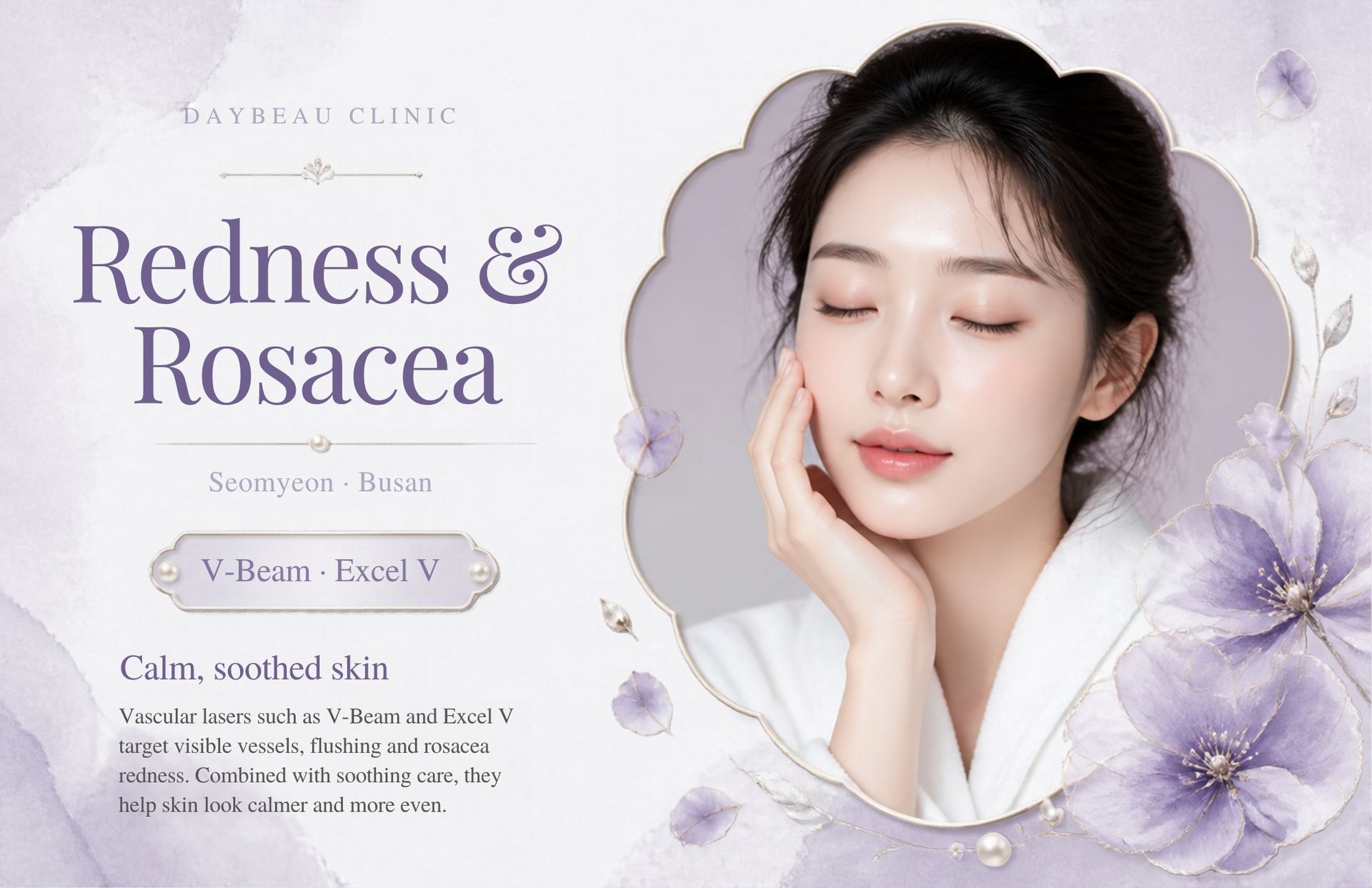
Once inflammation is calmer, a vascular laser may reduce persistent redness and visible vessels. Options such as V-Beam (pulsed dye 595 nm) or Excel V (532/1064 nm) are discussed educationally; device availability and the best option are confirmed at consultation.
✦ DIAGNOSIS FIRST
Your subtype, confirmed
A physician confirms the diagnosis and subtype before any plan.
✦ FLUSHING & VESSELS
Vascular laser, added gently
Paired with medical care to target redness and visible vessels.
Rosacea Treatment FAQ
Can rosacea be cured?
Rosacea is a chronic condition with no permanent cure, but symptoms can usually be well controlled with trigger avoidance, medical treatment and, for persistent redness, vascular laser. Maintenance care helps reduce flares.
How do I know if it is rosacea or just sensitive skin?
Rosacea typically involves repeated flushing, redness centred on the cheeks and nose that persists for months, and sometimes bumps without blackheads. Sensitive skin reacts to products but may not follow this pattern. A physician examination is the reliable way to tell.
Does laser alone treat rosacea?
Laser mainly addresses redness and visible vessels. Inflammatory bumps, stinging and flares usually also need medical management and trigger control, so laser is best seen as one part of a combined plan.
Should I avoid any skincare with rosacea?
Many people with rosacea do better avoiding strong scrubs, high-strength acids, alcohol-based toners, fragrance and facial steroid creams. A simple routine of gentle cleanser, moisturiser and sunscreen is commonly recommended.