
Home›Pigmentation› Laser Toning
● Laser Toning · Seomyeon, Busan
Laser Toning in Busan Seomyeon
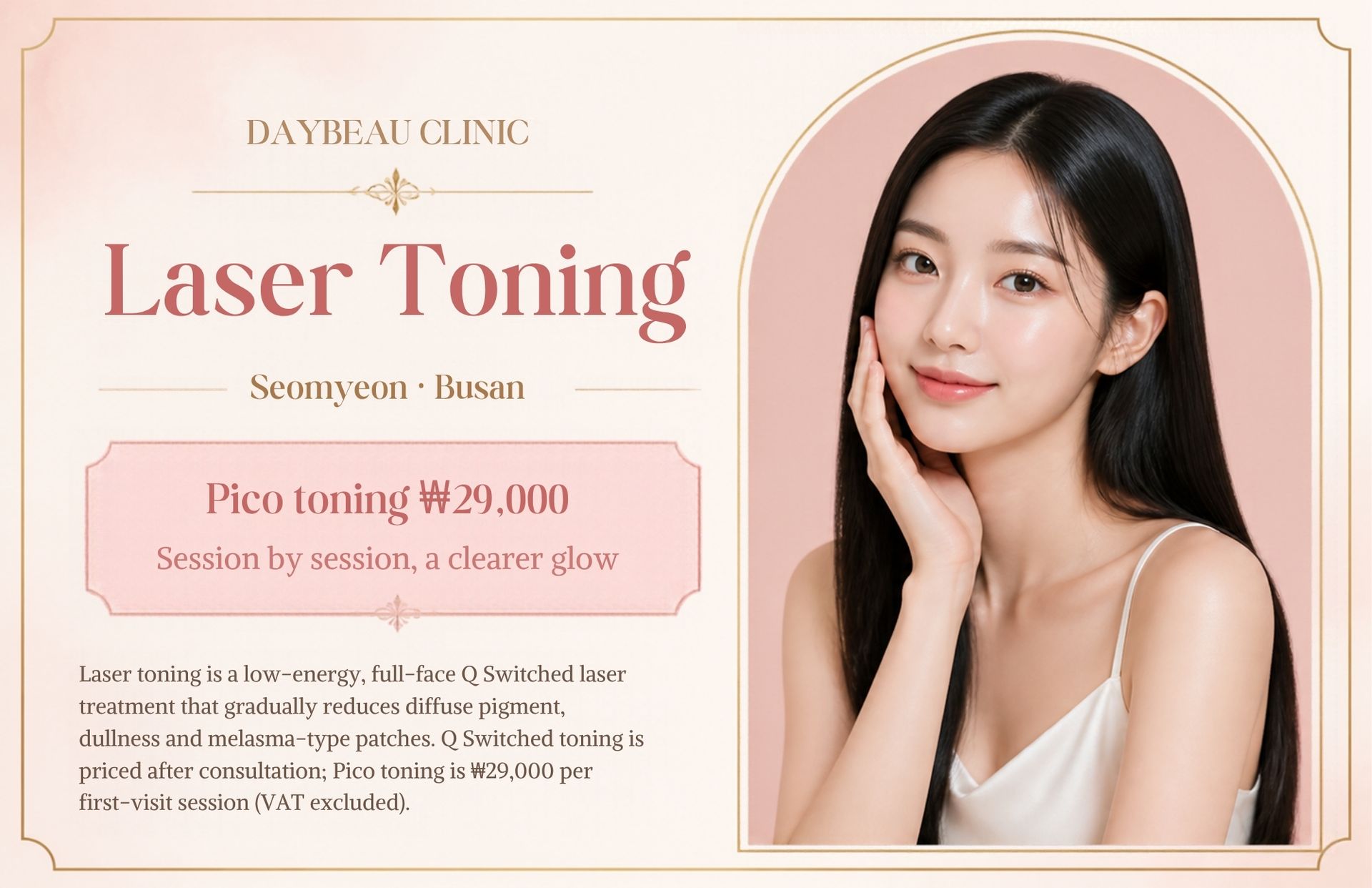
Quick answer: Laser toning is a low-energy, full-face treatment using a Q-switched nanosecond laser (commonly Nd:YAG 1064 nm) to gradually reduce diffuse pigment, dullness and melasma-type patches over a series of sessions. It is a long-established option for people who want gentle, repeatable pigment care with little downtime. At Daybeau Clinic Seomyeon, Q-switched laser toning is priced after consultation; the listed pico-based alternative, Pico Light Black Toning, is ₩29,000 per first-visit session (VAT excluded).
₩29,000 Pico toning session · first visit · VAT excl.
⏱ About 10–15 minutes
☁ Minimal downtime
♡ Typically 5–10 sessions
✦ Q-switched 1064 nm
| At a glance | |
|---|---|
| Technology | Q-switched nanosecond laser (e.g. 1064 nm Nd:YAG), low fluence |
| Treatment time | About 10–15 minutes |
| Comfort | Mild warmth and tapping; numbing rarely needed |
| Downtime | Minimal; slight redness for a few hours |
| Sessions | Typically 5–10 sessions, about 1–2 weeks apart |
| Results | Gradual, cumulative; maintenance often needed for melasma |
| Price | After consultation (Pico Light Black Toning alternative ₩29,000, VAT excl.) |
What Q-switched laser toning is
A Q-switched laser stores energy and releases it in very short, powerful nanosecond pulses. In toning, the energy is set low and the beam is wide, so it is passed evenly over the face many times. Melanin absorbs the energy and is fragmented gradually, without the crusting typical of spot removal. The 1064 nm wavelength penetrates relatively deeply and is generally considered suitable for many Asian skin types when used conservatively.
Who it suits
- Diffuse brown tone or dullness across the cheeks and forehead
- Stable melasma as part of a cautious, long-term plan
- People looking for regular, low-downtime maintenance of uneven tone
Defined individual spots, such as sun spots , are usually treated with targeted settings instead.
Laser toning vs. pico toning
Both are low-fluence toning protocols but use different pulse lengths. Q-switched toning uses nanosecond pulses and has a long track record; pico toning uses picosecond pulses with less heat per pulse and may break pigment more finely. Neither is right for everyone — the physician recommends one after examining your pigment. Read more about the device on the pico laser page.
Risks and aftercare
Over-frequent or too-strong toning can cause mottled light spots (hypopigmentation) or rebound darkening, so intervals and energy are monitored. After each session, use broad-spectrum SPF daily, moisturise, avoid saunas and strong heat for 1–2 days and pause retinoids or exfoliating acids briefly. Any changing or unusual spot is examined medically before toning. See the pigmentation hub for all options.
Laser Toning FAQ
What laser is used for laser toning?
Classic laser toning uses a Q-switched nanosecond laser, most often a 1064 nm Nd:YAG, set to low energy with a wide beam. It is passed evenly over the face to fragment diffuse pigment gradually rather than removing individual spots at once.
How much is laser toning at Daybeau Seomyeon?
Q-switched laser toning is priced after consultation. The clinic's listed toning option, Pico Light Black Toning, is ₩29,000 per first-visit session, excluding VAT, and the physician advises which suits your skin.
Can laser toning cause white spots?
It can, if sessions are too frequent or energy too high, which may lead to mottled hypopigmentation. Conservative settings, adequate intervals and monitoring of how your skin responds help reduce this risk.
Is laser toning or pico toning better for melasma?
Both low-fluence approaches are used for melasma. Pico toning delivers less heat per pulse, which some sensitive skin tolerates better, while Q-switched toning is well established. The choice depends on your melasma type, skin sensitivity and previous response.