
Home›Pigmentation› Pico Toning
● Pico Toning · Seomyeon, Busan
Pico Toning in Busan Seomyeon
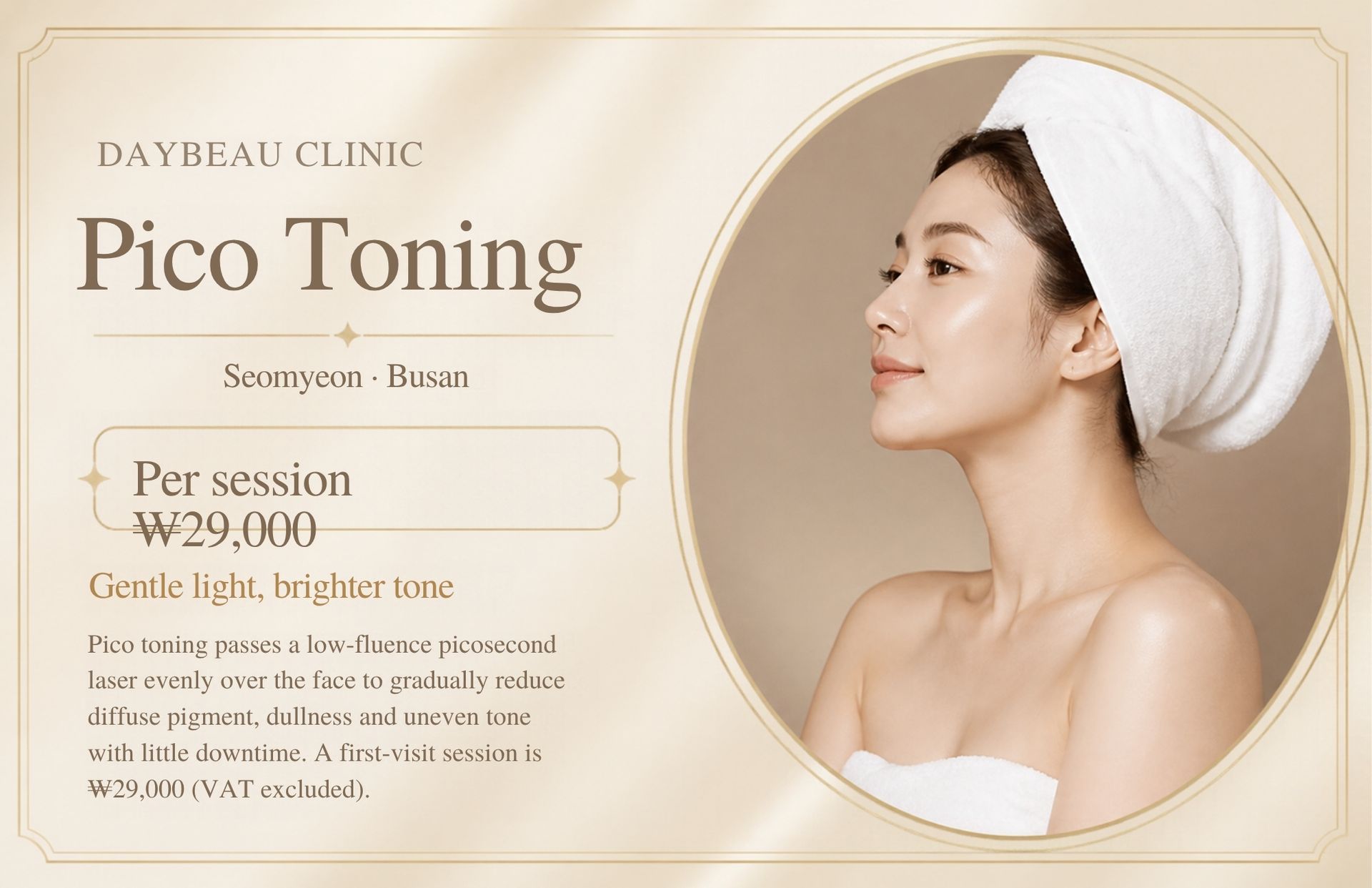
Quick answer: Pico toning is a low-fluence protocol in which a picosecond laser is passed evenly over the whole face to gradually reduce diffuse pigment, dullness and uneven tone with little or no downtime. It suits people with mild melasma, scattered fine pigment or post-acne marks who prefer a gentle series over aggressive spot treatment. At Daybeau Clinic Seomyeon, the first-visit Pico Light Black Toning session is ₩29,000 (VAT excluded).
₩29,000 per session · first visit · VAT excl.
⏱ About 10–15 minutes
☁ Minimal downtime
♡ Commonly 5–10 sessions
✦ Low-fluence full face
| At a glance | |
|---|---|
| Protocol | Pico Light Black Toning — low-fluence, full-face picosecond passes |
| Treatment time | About 10–15 minutes |
| Comfort | Light snapping and warmth; usually no numbing needed |
| Downtime | Minimal — mild redness for a few hours; makeup usually next day |
| Sessions | Commonly 5–10 sessions, 1–2 weeks apart |
| Results | Gradual, cumulative brightening; maintenance may be needed |
| First-visit price | ₩29,000 per session (VAT excl.) |
What pico toning is
Pico toning is not a different machine but a way of using a pico laser : low energy, a wide beam and multiple even passes. Instead of blasting one spot, it chips away at scattered pigment across the face a little at a time. Because each session is gentle, results build up over a series rather than appearing after one visit.
Who it suits
- Diffuse brownish dullness or uneven skin tone
- Mild, stable melasma , as part of a cautious plan
- Light post-acne brown marks ( PIH )
- People who want little or no visible downtime
Distinct, dark individual spots often respond better to spot-targeted settings, decided at consultation.
What a session looks like
After a skin assessment and cleansing, protective eyewear is applied and the physician-supervised laser is passed over the face in an even pattern. Settings are adjusted to your skin’s response; the aim is no crusting. Soothing care and sunscreen finish the visit.
Pico toning vs. Q-switched laser toning
Both are low-fluence toning protocols. Laser toning uses a Q-switched nanosecond laser, while pico toning uses picosecond pulses that deliver less heat per pulse. Some people find pico toning gentler, but both can work well; the physician recommends one based on your pigment type and skin sensitivity.
Aftercare
Use broad-spectrum SPF daily, moisturise, and pause retinoids, strong acids and scrubs for a few days. Avoid saunas and intense heat for 1–2 days, especially if you have melasma. More options are on the pigmentation hub .
Pico Toning FAQ
How much is pico toning in Busan at Daybeau Seomyeon?
The first-visit price for Pico Light Black Toning is ₩29,000 per session, excluding VAT. The number of sessions you may need is discussed after a skin assessment by the medical team.
How many pico toning sessions do I need?
Pico toning is cumulative, so most plans involve around 5–10 sessions spaced 1–2 weeks apart. Mild dullness may improve sooner, while melasma or stubborn diffuse pigment typically needs a longer series and occasional maintenance.
Is there downtime after pico toning?
Usually very little. Mild redness or warmth may last a few hours, and most people can wear makeup the next day. Crusting is not expected with toning settings, unlike spot-targeted pico treatment.
What is the difference between pico toning and a pico laser?
The pico laser is the device; pico toning is one way of using it. Toning uses low energy over the whole face for gradual tone improvement, while spot mode uses higher energy on individual spots and usually causes small crusts.